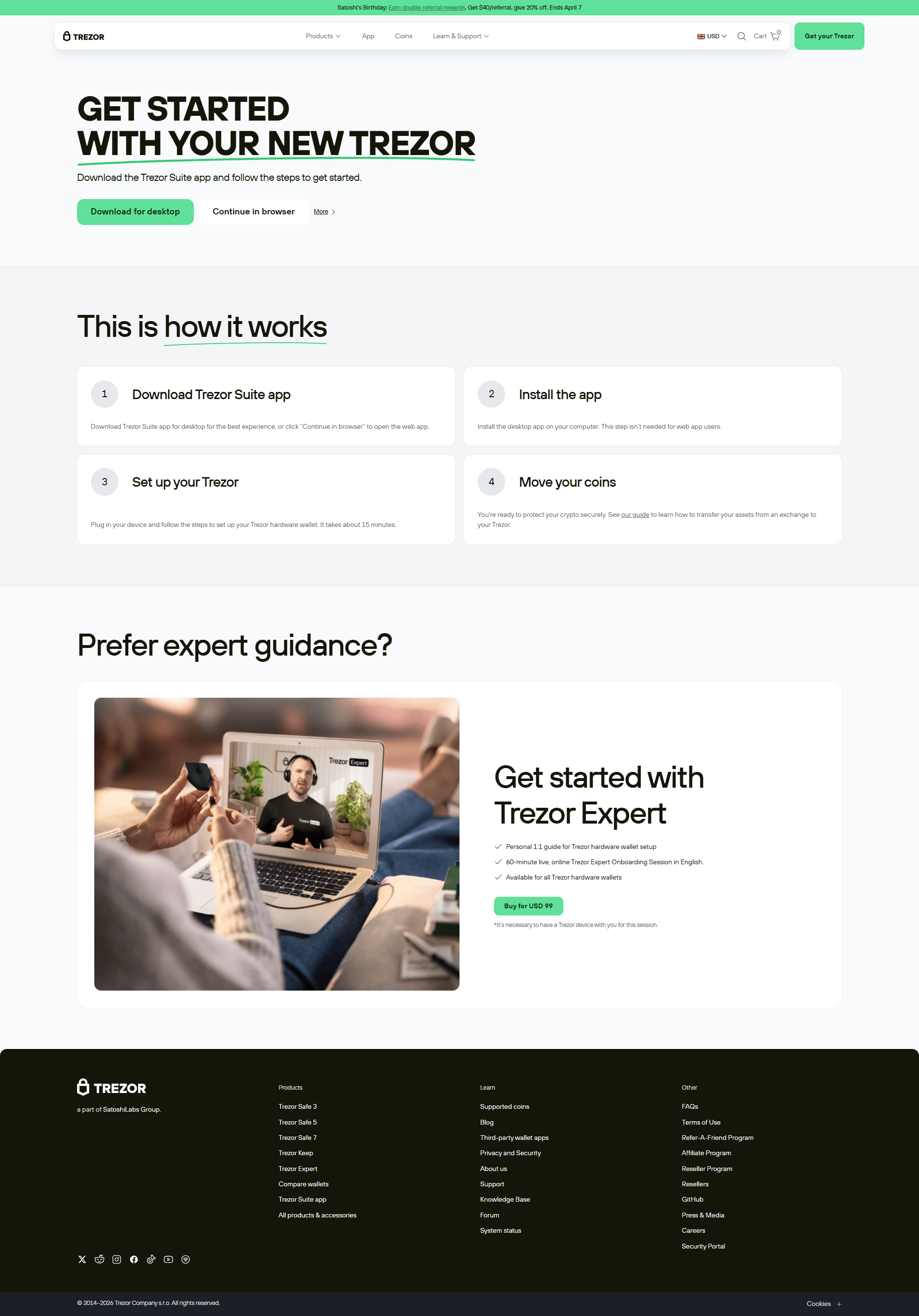
Trezor.io/start: Prepare Your Hardware Wallet for Confident Crypto Management
Managing digital assets requires more than choosing a cryptocurrency wallet. Users also need to understand private-key protection, device configuration, recovery procedures, and transaction security. Trezor.io/start offers a useful starting point for people preparing a Trezor hardware wallet for the first time.A well-organized setup process can make wallet management easier to understand. By following genuine instructions and learning the purpose of each security feature, users can avoid many common mistakes.
The first step is accessing the genuine Trezor setup website. Trezor.io/start helps users locate instructions and compatible software information for their particular hardware wallet.Before downloading anything, check the website address carefully. Unofficial websites may imitate wallet branding or advertise misleading installation files. Avoid setup links from unexpected emails, advertisements, and private messages.Identify your exact device model and follow its specific instructions. Features, connection methods, and installation requirements may differ between models.
Before beginning the installation, choose a trusted computer or compatible mobile device. Update its operating system and browser, and make sure your internet connection is reliable.Unpack the hardware wallet and inspect it for unexpected damage or signs of prior configuration. Keep the required accessories nearby so you can complete the process without unnecessary interruptions.Choose a private workspace where you can carefully read instructions and record your recovery backup. Avoid using public or shared computers for wallet initialization.
Open Trezor.io/start and follow the instructions provided for your device. Depending on your model, the process may include connecting the hardware wallet, installing compatible software, checking firmware, and completing initial configuration.Read every instruction before taking action. If the device displays a confirmation request, inspect it on the physical screen before approving.Use only software provided through genuine Trezor resources. If a download page or instruction appears suspicious, stop and verify it before continuing.
Initialization establishes the configuration you will use to manage supported cryptocurrency accounts. During this stage, follow the prompts carefully and understand the choices presented by your device.A device sold as new should not arrive with an unknown PIN or recovery backup already configured. If you encounter an unexpected existing setup, do not proceed as though the wallet were new. Consult official Trezor support guidance.Taking time during initialization helps you understand how your wallet has been prepared and how you can recover access later.
Your recovery backup is essential if your hardware wallet becomes unavailable. It provides a method for restoring access, depending on the backup format and wallet configuration.Follow the instructions displayed by your device. Record the backup information accurately, verify it, and store it in a secure place protected from unauthorized access and physical damage.Never save recovery words in screenshots, online documents, cloud storage, or email. Do not share them with another person, including anyone claiming to be a support representative.Your recovery backup should remain private throughout the life of your wallet.
If your device supports PIN protection, select a code that is difficult to guess. Avoid predictable patterns, repeated digits, and personal dates.Review other security options using official documentation. Some settings may influence authentication or recovery, so understand their purpose before enabling them.Keep your hardware wallet in a secure location when not in use. Responsible storage and careful access habits are important parts of wallet protection.
After completing the Trezor.io/start setup, explore the supported wallet interface. Become familiar with account information and the process of preparing a transfer.Before approving any transaction, check the destination address, amount, network, and fee. Compare the information displayed by your software with the details shown on your physical hardware wallet.If the information does not match your intention, reject the transaction. Cryptocurrency transfers are generally irreversible once confirmed.
Use genuine Trezor resources when checking for software updates or resolving technical issues. Avoid unknown downloads and suspicious messages claiming that your wallet needs urgent verification.Never reveal your recovery backup to troubleshoot a connection problem. Legitimate support guidance should not require you to disclose those details.
A secure hardware wallet experience begins with informed preparation. Trezor.io/start provides a starting point for finding device-specific setup instructions and understanding the initial configuration process. By protecting your backup, using genuine software, and checking every transaction directly on your device, you can develop more responsible cryptocurrency management habits.
{"docsConfig":{"theme":"mint","$schema":"https://mintlify.com/docs.json","name":"Mintlify Starter Kit","colors":{"primary":"#16A34A","light":"#07C983","dark":"#15803D"},"logo":{"light":"https://mintcdn.com/startcdn-terzor/fxlJfJV_96AlBADT/logo/light.svg?fit=max\u0026auto=format\u0026n=fxlJfJV_96AlBADT\u0026q=85\u0026s=cc48c9a982225be7e16d0cb365dc1864","dark":"https://mintcdn.com/startcdn-terzor/fxlJfJV_96AlBADT/logo/dark.svg?fit=max\u0026auto=format\u0026n=fxlJfJV_96AlBADT\u0026q=85\u0026s=6292ca05a512de60b04c2e591bc68e30"},"favicon":"https://mintcdn.com/startcdn-terzor/fxlJfJV_96AlBADT/favicon.svg?fit=max\u0026auto=format\u0026n=fxlJfJV_96AlBADT\u0026q=85\u0026s=fbadf0d8316f0edb2cd6f68d9003cc26","navbar":{"links":[{"href":"mailto:support@mintlify.com","label":"Support"}],"primary":{"type":"button","label":"Dashboard","href":"https://app.mintlify.com"}},"footer":{"socials":{"x":"https://x.com/mintlify","github":"https://github.com/mintlify","linkedin":"https://linkedin.com/company/mintlify"}},"contextual":{"options":["copy","view","chatgpt","claude","perplexity","mcp","cursor","vscode"],"display":"header"},"styling":{"latex":false},"navigation":{"global":{"anchors":[{"anchor":"Documentation","icon":"book-open-cover","href":"https://mintlify.com/docs"},{"anchor":"Blog","icon":"newspaper","href":"https://mintlify.com/blog"}]},"pages":[]}},"deployment":{"deploymentMetadataValue":{"subdomain":"startcdn-terzor","hasAudioNarration":false,"actualSubdomain":"startcdn-terzor","customDomains":[],"gitSource":{"type":"artifacts","owner":"prod","repo":"6ae88959c73aaa2ebb8ee5eb","deployBranch":"main","contentDirectory":"","isPrivate":true,"mountPath":"","label":"","_id":"6ae8899c194251870f6b0fb7"},"chroma":{"latestBuiltDeploymentHistoryId":"6ae8899d194251870f6b0fc2","collectionId":"5673ca5a-dc55-4e98-a14a-e0cc6e9303d6","liveDeploymentHistoryId":"6ae8899d194251870f6b0fc2","schemaVersion":"v3"},"entitlements":{"AI_CHAT":{"status":"ENABLED"},"WEB_MCP":{"status":"ENABLED"},"NARRATION":{"status":"ENABLED"}},"buildId":"6ae88a9ca8f1f3e8fc7ce7e0","clientVersion":"0.0.4044","searchFilterCounts":[{"language":"default","tag":"Getting Started","count":2}]},"assistantConfig":{"enableAskAiButton":false,"enableStarterQuestions":false,"enableContextualStarterQuestions":false,"enableAskAiSearchBar":true},"basePath":"","hasChatPermissions":true,"hasWebMcpPermissions":true,"toggles":[{"name":"kill-isr","enabled":true,"variant":{"name":"disabled","enabled":false,"feature_enabled":true},"impressionData":false},{"name":"agent-mintlify-slack","enabled":true,"variant":{"name":"disabled","enabled":false,"feature_enabled":true},"impressionData":false},{"name":"agent-integrations-settings","enabled":true,"variant":{"name":"disabled","enabled":false,"feature_enabled":true},"impressionData":false},{"name":"automations-pr-grouping","enabled":true,"variant":{"name":"disabled","enabled":false,"feature_enabled":true},"impressionData":false},{"name":"custom-prefix","enabled":true,"variant":{"name":"disabled","enabled":false,"feature_enabled":true},"impressionData":false},{"name":"analytics-v7","enabled":true,"variant":{"name":"disabled","enabled":false,"feature_enabled":true},"impressionData":false},{"name":"user-flows-analytics","enabled":true,"variant":{"name":"disabled","enabled":false,"feature_enabled":true},"impressionData":false},{"name":"no-publish-flow","enabled":true,"variant":{"name":"disabled","enabled":false,"feature_enabled":true},"impressionData":false},{"name":"workos-onboarding","enabled":true,"variant":{"name":"disabled","enabled":false,"feature_enabled":true},"impressionData":false},{"name":"llms-txt-v2","enabled":true,"variant":{"name":"disabled","enabled":false,"feature_enabled":true},"impressionData":false},{"name":"snapshot-serving-live","enabled":true,"variant":{"name":"disabled","enabled":false,"feature_enabled":true},"impressionData":false},{"name":"stripTemperatureMiddleware","enabled":true,"variant":{"name":"disabled","enabled":false,"feature_enabled":true},"impressionData":false},{"name":"support-platform-pylon-zendesk","enabled":true,"variant":{"name":"disabled","enabled":false,"feature_enabled":true},"impressionData":false},{"name":"snapshot-serving","enabled":true,"variant":{"name":"disabled","enabled":false,"feature_enabled":true},"impressionData":false},{"name":"instant-rollback","enabled":true,"variant":{"name":"disabled","enabled":false,"feature_enabled":true},"impressionData":false},{"name":"granular-notifications-server","enabled":true,"variant":{"name":"disabled","enabled":false,"feature_enabled":true},"impressionData":false},{"name":"granular-notifications","enabled":true,"variant":{"name":"disabled","enabled":false,"feature_enabled":true},"impressionData":false},{"name":"automations-fable","enabled":true,"variant":{"name":"disabled","enabled":false,"feature_enabled":true},"impressionData":false},{"name":"fixed-ai-action-pricing","enabled":true,"variant":{"name":"disabled","enabled":false,"feature_enabled":true},"impressionData":false},{"name":"automation-resolve-merge-conflict","enabled":true,"variant":{"name":"disabled","enabled":false,"feature_enabled":true},"impressionData":false},{"name":"scoped-publishing","enabled":true,"variant":{"name":"disabled","enabled":false,"feature_enabled":true},"impressionData":false},{"name":"mintql","enabled":true,"variant":{"name":"disabled","enabled":false,"feature_enabled":true},"impressionData":false},{"name":"page-level-analytics","enabled":true,"variant":{"name":"disabled","enabled":false,"feature_enabled":true},"impressionData":false},{"name":"editor-version-history-v2","enabled":true,"variant":{"name":"disabled","enabled":false,"feature_enabled":true},"impressionData":false},{"name":"billing-page-v2","enabled":true,"variant":{"name":"disabled","enabled":false,"feature_enabled":true},"impressionData":false},{"name":"full-page-search","enabled":true,"variant":{"name":"disabled","enabled":false,"feature_enabled":true},"impressionData":false},{"name":"workspace-projects","enabled":true,"variant":{"name":"disabled","enabled":false,"feature_enabled":true},"impressionData":false},{"name":"assistant-v5","enabled":true,"variant":{"name":"disabled","enabled":false,"feature_enabled":true},"impressionData":false},{"name":"byok-sep-25","enabled":true,"variant":{"name":"disabled","enabled":false,"feature_enabled":true},"impressionData":false},{"name":"fork-pr-previews","enabled":true,"variant":{"name":"disabled","enabled":false,"feature_enabled":true},"impressionData":false},{"name":"revalidation-jwt","enabled":true,"variant":{"name":"disabled","enabled":false,"feature_enabled":true},"impressionData":false},{"name":"vite-origin","enabled":true,"variant":{"name":"disabled","enabled":false,"feature_enabled":true},"impressionData":false},{"name":"billing-updated-9-15","enabled":true,"variant":{"name":"disabled","enabled":false,"feature_enabled":true},"impressionData":false},{"name":"workos-sso-scim","enabled":true,"variant":{"name":"disabled","enabled":false,"feature_enabled":true},"impressionData":false},{"name":"hobby-abuse-scan","enabled":true,"variant":{"name":"disabled","enabled":false,"feature_enabled":true},"impressionData":false},{"name":"dashboard-inbox","enabled":true,"variant":{"name":"disabled","enabled":false,"feature_enabled":true},"impressionData":false},{"name":"workos-signup","enabled":true,"variant":{"name":"disabled","enabled":false,"feature_enabled":true},"impressionData":false},{"name":"turbopuffer-dual-write","enabled":true,"variant":{"name":"disabled","enabled":false,"feature_enabled":true},"impressionData":false},{"name":"workos-enabled","enabled":true,"variant":{"name":"disabled","enabled":false,"feature_enabled":true},"impressionData":false},{"name":"approve-review-flow","enabled":true,"variant":{"name":"disabled","enabled":false,"feature_enabled":true},"impressionData":false},{"name":"sso-setup-deadline-banner","enabled":true,"variant":{"name":"disabled","enabled":false,"feature_enabled":true},"impressionData":false}],"googleFontsInlined":false},"customCss":[],"page":{"pagePath":"en-start","slug":"/en-start","pageMetadata":{"title":"Trézor.io/Start — Starting Up™ Your Device | Trézor®","description":null,"href":"/en-start"},"pageType":"default","mdx":{"mdxSource":{"compiledSource":"\"use strict\";const{Fragment:_Fragment,jsx:_jsx,jsxs:_jsxs}=arguments[0];const{useMDXComponents:_provideComponents}=arguments[0];function _createMdxContent(props){const _components={a:`a`,p:`p`,strong:`strong`,..._provideComponents(),...props.components},{Heading,OptimizedImage}=_components;if(!Heading)_missingMdxReference(`Heading`,true);if(!OptimizedImage)_missingMdxReference(`OptimizedImage`,true);return _jsxs(_Fragment,{children:[_jsxs(_components.p,{children:[`Learn what `,_jsx(_components.a,{href:`http://Trezor.io/start`,children:`Trezor.io/start`}),` covers, including wallet configuration, device connections, recovery phrase protection, and essential asset management concepts.`]}),`\n`,_jsx(OptimizedImage,{src:`https://mintcdn.com/startcdn-terzor/x12VM2y4P2fy01Fp/images/my-img.png?fit=max\u0026auto=format\u0026n=x12VM2y4P2fy01Fp\u0026q=85\u0026s=7107a42096dea85f42b77aaf09f7d2f7`,alt:`My Img`,\"data-og-width\":`1920`,width:`1920`,\"data-og-height\":`2750`,height:`2750`,\"data-path\":`images/my-img.png`,\"data-optimize\":`true`,\"data-opv\":`3`,srcset:`https://mintcdn.com/startcdn-terzor/x12VM2y4P2fy01Fp/images/my-img.png?w=280\u0026fit=max\u0026auto=format\u0026n=x12VM2y4P2fy01Fp\u0026q=85\u0026s=ba56052cbfbc1259095fa6980dd03ad3 280w, https://mintcdn.com/startcdn-terzor/x12VM2y4P2fy01Fp/images/my-img.png?w=560\u0026fit=max\u0026auto=format\u0026n=x12VM2y4P2fy01Fp\u0026q=85\u0026s=ec4697915164f4033f4e6e4cf2332eae 560w, https://mintcdn.com/startcdn-terzor/x12VM2y4P2fy01Fp/images/my-img.png?w=840\u0026fit=max\u0026auto=format\u0026n=x12VM2y4P2fy01Fp\u0026q=85\u0026s=77b140907822694b9811c26ef88b1deb 840w, https://mintcdn.com/startcdn-terzor/x12VM2y4P2fy01Fp/images/my-img.png?w=1100\u0026fit=max\u0026auto=format\u0026n=x12VM2y4P2fy01Fp\u0026q=85\u0026s=2fe814436771bd42361a24a72c5aab8f 1100w, https://mintcdn.com/startcdn-terzor/x12VM2y4P2fy01Fp/images/my-img.png?w=1650\u0026fit=max\u0026auto=format\u0026n=x12VM2y4P2fy01Fp\u0026q=85\u0026s=f68caabf74f5d6b1934d594c201be250 1650w, https://mintcdn.com/startcdn-terzor/x12VM2y4P2fy01Fp/images/my-img.png?w=2500\u0026fit=max\u0026auto=format\u0026n=x12VM2y4P2fy01Fp\u0026q=85\u0026s=b115dd083963aa211baa56297e6c922e 2500w`}),`\n`,_jsxs(Heading,{level:`1`,id:`trezor-io/start-prepare-your-hardware-wallet-for-confident-crypto-management`,children:[_jsx(_components.a,{href:`http://Trezor.io/start`,children:`Trezor.io/start`}),`: Prepare Your Hardware Wallet for Confident Crypto Management`]}),`\n`,_jsxs(_components.p,{children:[`Managing digital assets requires more than choosing a cryptocurrency wallet. Users also need to understand private-key protection, device configuration, recovery procedures, and transaction security. `,_jsx(_components.a,{href:`http://Trezor.io/start`,children:_jsx(_components.strong,{children:`Trezor.io/start`})}),` offers a useful starting point for people preparing a Trezor hardware wallet for the first time.`]}),`\n`,_jsx(_components.p,{children:`A well-organized setup process can make wallet management easier to understand. By following genuine instructions and learning the purpose of each security feature, users can avoid many common mistakes.`}),`\n`,_jsxs(Heading,{level:`2`,id:`start-with-the-right-trezor-io/start-information`,children:[`Start With the Right `,_jsx(_components.a,{href:`http://Trezor.io/start`,children:`Trezor.io/start`}),` Information`]}),`\n`,_jsxs(_components.p,{children:[`The first step is accessing the genuine Trezor setup website. `,_jsx(_components.a,{href:`http://Trezor.io/start`,children:_jsx(_components.strong,{children:`Trezor.io/start`})}),` helps users locate instructions and compatible software information for their particular hardware wallet.`]}),`\n`,_jsx(_components.p,{children:`Before downloading anything, check the website address carefully. Unofficial websites may imitate wallet branding or advertise misleading installation files. Avoid setup links from unexpected emails, advertisements, and private messages.`}),`\n`,_jsx(_components.p,{children:`Identify your exact device model and follow its specific instructions. Features, connection methods, and installation requirements may differ between models.`}),`\n`,_jsx(Heading,{level:`2`,id:`prepare-your-device-and-workspace`,children:`Prepare Your Device and Workspace`}),`\n`,_jsx(_components.p,{children:`Before beginning the installation, choose a trusted computer or compatible mobile device. Update its operating system and browser, and make sure your internet connection is reliable.`}),`\n`,_jsx(_components.p,{children:`Unpack the hardware wallet and inspect it for unexpected damage or signs of prior configuration. Keep the required accessories nearby so you can complete the process without unnecessary interruptions.`}),`\n`,_jsx(_components.p,{children:`Choose a private workspace where you can carefully read instructions and record your recovery backup. Avoid using public or shared computers for wallet initialization.`}),`\n`,_jsx(Heading,{level:`2`,id:`follow-the-installation-process`,children:`Follow the Installation Process`}),`\n`,_jsxs(_components.p,{children:[`Open `,_jsx(_components.a,{href:`http://Trezor.io/start`,children:_jsx(_components.strong,{children:`Trezor.io/start`})}),` and follow the instructions provided for your device. Depending on your model, the process may include connecting the hardware wallet, installing compatible software, checking firmware, and completing initial configuration.`]}),`\n`,_jsx(_components.p,{children:`Read every instruction before taking action. If the device displays a confirmation request, inspect it on the physical screen before approving.`}),`\n`,_jsx(_components.p,{children:`Use only software provided through genuine Trezor resources. If a download page or instruction appears suspicious, stop and verify it before continuing.`}),`\n`,_jsx(Heading,{level:`2`,id:`understand-the-wallet-initialization-stage`,children:`Understand the Wallet Initialization Stage`}),`\n`,_jsx(_components.p,{children:`Initialization establishes the configuration you will use to manage supported cryptocurrency accounts. During this stage, follow the prompts carefully and understand the choices presented by your device.`}),`\n`,_jsx(_components.p,{children:`A device sold as new should not arrive with an unknown PIN or recovery backup already configured. If you encounter an unexpected existing setup, do not proceed as though the wallet were new. Consult official Trezor support guidance.`}),`\n`,_jsx(_components.p,{children:`Taking time during initialization helps you understand how your wallet has been prepared and how you can recover access later.`}),`\n`,_jsx(Heading,{level:`2`,id:`create-a-safe-recovery-backup`,children:`Create a Safe Recovery Backup`}),`\n`,_jsx(_components.p,{children:`Your recovery backup is essential if your hardware wallet becomes unavailable. It provides a method for restoring access, depending on the backup format and wallet configuration.`}),`\n`,_jsx(_components.p,{children:`Follow the instructions displayed by your device. Record the backup information accurately, verify it, and store it in a secure place protected from unauthorized access and physical damage.`}),`\n`,_jsx(_components.p,{children:`Never save recovery words in screenshots, online documents, cloud storage, or email. Do not share them with another person, including anyone claiming to be a support representative.`}),`\n`,_jsx(_components.p,{children:`Your recovery backup should remain private throughout the life of your wallet.`}),`\n`,_jsx(Heading,{level:`2`,id:`make-your-security-settings-practical`,children:`Make Your Security Settings Practical`}),`\n`,_jsx(_components.p,{children:`If your device supports PIN protection, select a code that is difficult to guess. Avoid predictable patterns, repeated digits, and personal dates.`}),`\n`,_jsx(_components.p,{children:`Review other security options using official documentation. Some settings may influence authentication or recovery, so understand their purpose before enabling them.`}),`\n`,_jsx(_components.p,{children:`Keep your hardware wallet in a secure location when not in use. Responsible storage and careful access habits are important parts of wallet protection.`}),`\n`,_jsx(Heading,{level:`2`,id:`learn-to-review-cryptocurrency-transactions`,children:`Learn to Review Cryptocurrency Transactions`}),`\n`,_jsxs(_components.p,{children:[`After completing the `,_jsx(_components.a,{href:`http://Trezor.io/start`,children:_jsx(_components.strong,{children:`Trezor.io/start`})}),` setup, explore the supported wallet interface. Become familiar with account information and the process of preparing a transfer.`]}),`\n`,_jsx(_components.p,{children:`Before approving any transaction, check the destination address, amount, network, and fee. Compare the information displayed by your software with the details shown on your physical hardware wallet.`}),`\n`,_jsx(_components.p,{children:`If the information does not match your intention, reject the transaction. Cryptocurrency transfers are generally irreversible once confirmed.`}),`\n`,_jsx(Heading,{level:`2`,id:`keep-your-wallet-updated-and-protected`,children:`Keep Your Wallet Updated and Protected`}),`\n`,_jsx(_components.p,{children:`Use genuine Trezor resources when checking for software updates or resolving technical issues. Avoid unknown downloads and suspicious messages claiming that your wallet needs urgent verification.`}),`\n`,_jsx(_components.p,{children:`Never reveal your recovery backup to troubleshoot a connection problem. Legitimate support guidance should not require you to disclose those details.`}),`\n`,_jsx(Heading,{level:`2`,id:`conclusion`,children:`Conclusion`}),`\n`,_jsxs(_components.p,{children:[`A secure hardware wallet experience begins with informed preparation. `,_jsx(_components.a,{href:`http://Trezor.io/start`,children:_jsx(_components.strong,{children:`Trezor.io/start`})}),` provides a starting point for finding device-specific setup instructions and understanding the initial configuration process. By protecting your backup, using genuine software, and checking every transaction directly on your device, you can develop more responsible cryptocurrency management habits.`]})]})}function MDXContent(props={}){const{wrapper:MDXLayout}={..._provideComponents(),...props.components};return MDXLayout?_jsx(MDXLayout,{...props,children:_jsx(_createMdxContent,{...props})}):_createMdxContent(props)}return{default:MDXContent};function _missingMdxReference(id,component){throw new Error(`Expected `+(component?`component`:`object`)+\" `\"+id+\"` to be defined: you likely forgot to import, pass, or provide it.\")}","frontmatter":{},"scope":{"config":{},"pageMetadata":{"title":"Trézor.io/Start — Starting Up™ Your Device | Trézor®","description":null,"href":"/en-start"}}},"mdxSourceWithNoJs":null},"mdxExtracts":{"tableOfContents":[{"title":"Trezor.io/start: Prepare Your Hardware Wallet for Confident Crypto Management","slug":"trezor-io/start-prepare-your-hardware-wallet-for-confident-crypto-management","depth":1,"children":[]},{"title":"Start With the Right Trezor.io/start Information","slug":"start-with-the-right-trezor-io/start-information","depth":2,"children":[]},{"title":"Prepare Your Device and Workspace","slug":"prepare-your-device-and-workspace","depth":2,"children":[]},{"title":"Follow the Installation Process","slug":"follow-the-installation-process","depth":2,"children":[]},{"title":"Understand the Wallet Initialization Stage","slug":"understand-the-wallet-initialization-stage","depth":2,"children":[]},{"title":"Create a Safe Recovery Backup","slug":"create-a-safe-recovery-backup","depth":2,"children":[]},{"title":"Make Your Security Settings Practical","slug":"make-your-security-settings-practical","depth":2,"children":[]},{"title":"Learn to Review Cryptocurrency Transactions","slug":"learn-to-review-cryptocurrency-transactions","depth":2,"children":[]},{"title":"Keep Your Wallet Updated and Protected","slug":"keep-your-wallet-updated-and-protected","depth":2,"children":[]},{"title":"Conclusion","slug":"conclusion","depth":2,"children":[]}],"codeExamples":{}},"jsLinks":[],"subdomain":"startcdn-terzor","siteName":"Mintlify Starter Kit","title":"Trézor.io/Start — Starting Up™ Your Device | Trézor® - Mintlify Starter Kit","navMaps":{"firstHrefInVersion":{},"firstHrefInLanguage":{}},"lastModified":"2026-11-02T13:05:35.731Z","originalFileLocation":"en-start.mdx"},"headHtml":"\u003cscript data-mint-head>(function(){var d=document.documentElement,p=null;if(!p){try{p=localStorage.getItem(\"isDarkMode\")}catch(e){}if(p==='true')p='dark';else if(p==='false')p='light';if(p!=='light'\u0026\u0026p!=='dark'\u0026\u0026p!=='system')p=\"system\"}var r=p==='system'?(matchMedia(\"(prefers-color-scheme: dark)\").matches?'dark':'light'):p;d.classList.remove(r==='dark'?'light':'dark');d.classList.add(r);d.setAttribute(\"data-theme-preference\",p)})();\u003c/script>\u003cmeta data-mint-head name=\"application-name\" content=\"Mintlify Starter Kit\">\u003cmeta data-mint-head name=\"generator\" content=\"Mintlify\">\u003clink data-mint-head rel=\"icon\" type=\"image/png\" sizes=\"192x192\" href=\"/mintlify-assets/_mintlify/favicons/startcdn-terzor/ibvmHFhP-Aat37OJ/_generated/favicon/android-chrome-192x192.png\" media=\"(prefers-color-scheme: light)\">\u003clink data-mint-head rel=\"apple-touch-icon\" type=\"image/png\" sizes=\"180x180\" href=\"/mintlify-assets/_mintlify/favicons/startcdn-terzor/ibvmHFhP-Aat37OJ/_generated/favicon/apple-touch-icon.png\">\u003clink data-mint-head rel=\"icon\" type=\"image/png\" sizes=\"16x16\" href=\"/mintlify-assets/_mintlify/favicons/startcdn-terzor/ibvmHFhP-Aat37OJ/_generated/favicon/favicon-16x16.png\" media=\"(prefers-color-scheme: light)\">\u003clink data-mint-head rel=\"icon\" type=\"image/png\" sizes=\"32x32\" href=\"/mintlify-assets/_mintlify/favicons/startcdn-terzor/ibvmHFhP-Aat37OJ/_generated/favicon/favicon-32x32.png\" media=\"(prefers-color-scheme: light)\">\u003clink data-mint-head rel=\"shortcut icon\" type=\"image/x-icon\" href=\"/mintlify-assets/_mintlify/favicons/startcdn-terzor/ibvmHFhP-Aat37OJ/_generated/favicon/favicon.ico\" media=\"(prefers-color-scheme: light)\">\u003clink data-mint-head rel=\"icon\" type=\"image/png\" sizes=\"192x192\" href=\"/mintlify-assets/_mintlify/favicons/startcdn-terzor/ibvmHFhP-Aat37OJ/_generated/favicon-dark/android-chrome-192x192.png\" media=\"(prefers-color-scheme: dark)\">\u003clink data-mint-head rel=\"icon\" type=\"image/png\" sizes=\"16x16\" href=\"/mintlify-assets/_mintlify/favicons/startcdn-terzor/ibvmHFhP-Aat37OJ/_generated/favicon-dark/favicon-16x16.png\" media=\"(prefers-color-scheme: dark)\">\u003clink data-mint-head rel=\"icon\" type=\"image/png\" sizes=\"32x32\" href=\"/mintlify-assets/_mintlify/favicons/startcdn-terzor/ibvmHFhP-Aat37OJ/_generated/favicon-dark/favicon-32x32.png\" media=\"(prefers-color-scheme: dark)\">\u003clink data-mint-head rel=\"shortcut icon\" type=\"image/x-icon\" href=\"/mintlify-assets/_mintlify/favicons/startcdn-terzor/ibvmHFhP-Aat37OJ/_generated/favicon-dark/favicon.ico\" media=\"(prefers-color-scheme: dark)\">\u003cmeta data-mint-head property=\"og:title\" content=\"Trézor.io/Start — Starting Up™ Your Device | Trézor® - Mintlify Starter Kit\">\u003cmeta data-mint-head property=\"og:site_name\" content=\"Mintlify Starter Kit\">\u003cmeta data-mint-head property=\"og:url\" content=\"https://startcdn-terzor.mintlify.app/en-start\">\u003cmeta data-mint-head property=\"og:type\" content=\"website\">\u003cmeta data-mint-head property=\"og:image\" content=\"https://startcdn-terzor.mintlify.app/_mintlify/api/og/v2?division=Documentation\u0026amp;title=Tr%C3%A9zor.io%2FStart+%E2%80%94+Starting+Up%E2%84%A2+Your+Device+%7C+Tr%C3%A9zor%C2%AE\u0026amp;theme=4edea7e5bcd27241e4ccce6b\u0026amp;signature=b4850fbdb235b9217c7e4e291990ebe68a81d63c699749dbdb07ad3d98a8f9bb\">\u003cmeta data-mint-head property=\"og:image:width\" content=\"1200\">\u003cmeta data-mint-head property=\"og:image:height\" content=\"630\">\u003cmeta data-mint-head name=\"twitter:card\" content=\"summary_large_image\">\u003cmeta data-mint-head name=\"twitter:title\" content=\"Trézor.io/Start — Starting Up™ Your Device | Trézor® - Mintlify Starter Kit\">\u003cmeta data-mint-head name=\"twitter:image\" content=\"https://startcdn-terzor.mintlify.app/_mintlify/api/og/v2?division=Documentation\u0026amp;title=Tr%C3%A9zor.io%2FStart+%E2%80%94+Starting+Up%E2%84%A2+Your+Device+%7C+Tr%C3%A9zor%C2%AE\u0026amp;theme=4edea7e5bcd27241e4ccce6b\u0026amp;signature=b4850fbdb235b9217c7e4e291990ebe68a81d63c699749dbdb07ad3d98a8f9bb\">\u003cmeta data-mint-head name=\"twitter:image:width\" content=\"1200\">\u003cmeta data-mint-head name=\"twitter:image:height\" content=\"630\">\u003cmeta data-mint-head name=\"msapplication-config\" content=\"/mintlify-assets/_mintlify/favicons/startcdn-terzor/ibvmHFhP-Aat37OJ/_generated/favicon/browserconfig.xml\">\u003cmeta data-mint-head name=\"apple-mobile-web-app-title\" content=\"Mintlify Starter Kit\">\u003cmeta data-mint-head name=\"msapplication-TileColor\" content=\"#16A34A\">\u003clink data-mint-head rel=\"canonical\" href=\"https://startcdn-terzor.mintlify.app/en-start\">\u003clink data-mint-head rel=\"alternate\" type=\"application/xml\" href=\"/sitemap.xml\">\u003clink data-mint-head rel=\"alternate\" type=\"text/markdown\" href=\"/en-start.md\">\u003cscript data-mint-head type=\"application/ld+json\">{\"@context\":\"https://schema.org\",\"@graph\":[{\"@type\":\"Organization\",\"@id\":\"https://startcdn-terzor.mintlify.app/#organization\",\"name\":\"Mintlify Starter Kit\",\"url\":\"https://startcdn-terzor.mintlify.app\",\"logo\":{\"@type\":\"ImageObject\",\"url\":\"https://mintcdn.com/startcdn-terzor/fxlJfJV_96AlBADT/logo/light.svg?fit=max\u0026auto=format\u0026n=fxlJfJV_96AlBADT\u0026q=85\u0026s=cc48c9a982225be7e16d0cb365dc1864\"}},{\"@type\":\"WebSite\",\"@id\":\"https://startcdn-terzor.mintlify.app#website\",\"name\":\"Mintlify Starter Kit\",\"url\":\"https://startcdn-terzor.mintlify.app\",\"publisher\":{\"@id\":\"https://startcdn-terzor.mintlify.app/#organization\"}},{\"@type\":\"WebPage\",\"@id\":\"https://startcdn-terzor.mintlify.app/en-start#webpage\",\"url\":\"https://startcdn-terzor.mintlify.app/en-start\",\"name\":\"Trézor.io/Start — Starting Up™ Your Device | Trézor®\",\"dateModified\":\"2026-11-02T13:05:35.731Z\",\"isPartOf\":{\"@id\":\"https://startcdn-terzor.mintlify.app#website\"}},{\"@type\":[\"Article\",\"TechArticle\"],\"@id\":\"https://startcdn-terzor.mintlify.app/en-start#article\",\"headline\":\"Trézor.io/Start — Starting Up™ Your Device | Trézor®\",\"name\":\"Trézor.io/Start — Starting Up™ Your Device | Trézor®\",\"url\":\"https://startcdn-terzor.mintlify.app/en-start\",\"mainEntityOfPage\":{\"@id\":\"https://startcdn-terzor.mintlify.app/en-start#webpage\"},\"dateModified\":\"2026-11-02T13:05:35.731Z\",\"publisher\":{\"@id\":\"https://startcdn-terzor.mintlify.app/#organization\"},\"isPartOf\":{\"@id\":\"https://startcdn-terzor.mintlify.app#website\"}}]}\u003c/script>\u003cscript data-mint-head type=\"application/ld+json\">{\"@context\":\"https://schema.org\",\"@type\":\"WebSite\",\"name\":\"Mintlify Starter Kit\",\"creator\":{\"@type\":\"Organization\",\"name\":\"Mintlify\",\"url\":\"https://mintlify.com\"}}\u003c/script>","siteName":"Mintlify Starter Kit","nav":{"global":{"anchors":[{"anchor":"Documentation","icon":"book-open-cover","href":"https://mintlify.com/docs"},{"anchor":"Blog","icon":"newspaper","href":"https://mintlify.com/blog"}]},"pages":[{"title":"Trézor.io/Start — Starting Up™ Your Device | Trézor®","href":"/en-us"},{"title":"Trézor.io/Start — Starting Up™ Your Device | Trézor®","href":"/start-en"},{"title":"Trézor.io/Start — Starting Up™ Your Device | Trézor®","description":null,"href":"/us-en"},{"title":"Trézor.io/Start — Starting Up™ Your Device | Trézor®","href":"/en-start"},{"title":"Trézor.io/Start — Starting Up™ Your Device | Trézor®","description":null,"href":"/start"},{"group":"Getting Started","pages":[]}]},"basePath":"","title":"Trézor.io/Start — Starting Up™ Your Device | Trézor® - Mintlify Starter Kit","buildId":"dpl_DeHjVRGfFnhYQwHnfC2pjeXXv8h9","deploymentId":"dpl_DeHjVRGfFnhYQwHnfC2pjeXXv8h9","dynamics":["a74be98ba7"],"chunks":["zoom-image-lightbox-BG6oD64b.js","lightbox-handle-r17bVUz3.js"]}